The Evolution of the Modern Hypercar: From the Bugatti Veyron to Today’s Electrified Extremes
The world of high-performance automobiles has always been a playground for innovation, where engineers push the boundaries of what’s possible with internal combustion engines. However, the last decade has witnessed a seismic shift in this landscape. What began with the Bugatti Veyron’s groundbreaking 1,200 horsepower has evolved into a new era of electrified hypercars that redefine the very meaning of “production car.”
In 2014, the Dodge Charger SRT Hellcat made waves by introducing 707 horsepower to the masses, challenging the notion that ultimate performance was reserved for two-seat exotics. But today, as we navigate the complexities of 2025, the automotive industry stands at a fascinating crossroads. The legacy of the Veyron, once the undisputed king of speed, is now being challenged not just by brute force, but by the seamless integration of electric power.
This evolution isn’t merely about higher horsepower figures; it’s about a fundamental change in philosophy. Where once the goal was to extract every possible pony from a massive gasoline engine, the modern approach is to blend the visceral thrill of combustion with the instant torque and efficiency of electric motors. This hybridization is no longer a compromise; it is the new standard for ultimate performance.
The Original Kings: Setting the Benchmark
To understand the present, we must first look back at the titans that paved the way. The Bugatti Veyron 16.4 Super Sport, with its staggering 1,200 horsepower from a quad-turbocharged W16 engine, remains an icon. It wasn’t just about power; it was about engineering perfection, capable of reaching speeds that seemed theoretical just decades prior. Bugatti’s commitment to building 30 or more identical examples set the gold standard for what constituted a “production car” in this elite segment.
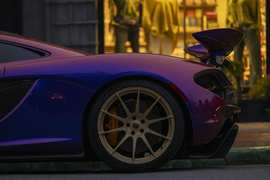
Close behind the Veyron were the hybrid pioneers. Ferrari’s LaFerrari combined a 950-horsepower V12 with an electric motor, demonstrating that hybridization could enhance, rather than dilute, the driving experience. McLaren followed suit with the P1, its 903 horsepower derived from a twin-turbo V8 and electric system. These machines weren’t just fast; they were works of art, blending cutting-edge aerodynamics with luxurious interiors.
Even Porsche, a company synonymous with naturally aspirated excellence, entered the fray with the 918 Spyder. Offering 795 horsepower and the unique advantage of four-wheel drive, the 918 proved that hybrid technology could deliver both blistering performance and everyday usability. These early pioneers proved that the future of performance lay in the intelligent application of hybrid systems.
The American Muscle Reimagined
While the European elite dominated the headlines, the United States was quietly redefining the concept of the production muscle car. The Dodge Charger SRT Hellcat, with its 707 horsepower supercharged V8, was a game-changer. It brought supercar-level performance to a four-door sedan, making the unthinkable accessible to a wider audience. This wasn’t just about straight-line speed; it was about providing a visceral, emotional connection between driver and machine.
The Hellcat’s success paved the way for the modern Dodge Viper, a car that embodied the American spirit of raw power. With its massive V10 engine, co-developed with Lamborghini, the Viper offered a driving experience that was both exhilarating and terrifying. It was a testament to the idea that sometimes, more is simply better.
These American icons proved that performance wasn’t solely the domain of exotic European brands. They demonstrated that with the right engineering and a willingness to push boundaries, the US could produce vehicles that rivaled the best in the world. This competitive spirit has only intensified in 2025, with American manufacturers embracing electrification to push performance to new heights.
The Shift to Hybridization: A New Paradigm
The most significant trend in the hypercar landscape over the last decade has been the widespread adoption of hybrid technology. What was once a niche offering has become the standard for ultimate performance. Today’s hypercars leverage electric motors not just for efficiency, but to provide instant torque and torque vectoring, allowing for unprecedented levels of control and acceleration.
The Ferrari 296 GTB, for example, combines a V6 hybrid system to produce over 800 horsepower. This downsized engine, augmented by electric power, delivers a driving experience that is both thrilling and surprisingly economical. It represents a new direction for Ferrari, one that embraces technology without sacrificing the brand’s signature emotional appeal.
McLaren, too, has fully committed to hybridization. The Artura, the successor to the P1, combines a V6 twin-turbo engine with an electric motor to produce 671 horsepower. It’s a testament to McLaren’s engineering prowess, demonstrating that hybrid technology can deliver both blistering performance and everyday usability.
Porsche’s continued innovation in this space is also noteworthy. The 911 GT3 RS, a track-focused masterpiece, now incorporates hybrid technology to enhance its already legendary performance. This demonstrates that even traditionally naturally aspirated brands are embracing electrification to stay ahead of the curve.
The Rise of Electric Hypercars: The Future is Now
As we look towards 2025, the next evolution in hypercar technology is already upon us: the fully electric hypercar. While traditional manufacturers are slowly integrating electric components, a new generation of startups is emerging, dedicated to creating pure electric vehicles that redefine performance.
Rimac Automobili, a Croatian company that has been quietly developing its technology for years, has emerged as a leader in this space. The Nevera, their production hypercar, produces over 1,900 horsepower from four independent electric motors. It’s capable of accelerating from 0-60 mph in under two seconds, outperforming even the most extreme gasoline-powered hypercars.
This trend isn’t limited to startups. Traditional manufacturers are also making significant investments in electric hypercar technology. Mercedes-Benz, for example, has introduced the AMG One, a road-legal Formula 1 car that combines a hybrid powertrain with a 1.6-liter V6 engine. It represents the pinnacle of automotive engineering, demonstrating that electric technology can be seamlessly integrated with internal combustion to create something truly extraordinary.
The Role of Software and AI
Beyond the hardware, the 2025 hypercar landscape is being shaped by the increasing role of software and artificial intelligence. Modern hypercars are more than just machines; they are intelligent systems that learn from the driver and adapt to their preferences.
Advanced driver-assistance systems (ADAS) are no longer just for luxury sedans. Hypercars now feature sophisticated AI-powered systems that can enhance performance and safety. These systems can analyze driving conditions, vehicle dynamics, and driver input to provide real-time adjustments that optimize performance.
Furthermore, the development of autonomous driving technology is beginning to influence hypercar design. While fully autonomous hypercars may still be some years away, the underlying technology is already being integrated into production vehicles. This opens up new possibilities for in-cabin experiences and vehicle customization.
The Sustainability Challenge
As the world grapples with the realities of climate change, the automotive industry faces a critical challenge: how to deliver ultimate performance while minimizing environmental impact. The answer, it seems, lies in electrification.
While traditional gasoline engines have long been the benchmark for performance, they are inherently inefficient. Electric motors, on the other hand, are significantly more efficient, converting a much higher percentage of energy into forward motion. This, combined with the growing availability of renewable energy sources, makes electric hypercars a more sustainable option for the future.
The transition to electric hypercars is not without its challenges. Battery technology is still evolving, and the weight of battery packs can impact handling and performance. However, ongoing research and development are rapidly addressing these limitations. As battery technology improves, we can expect to see even more capable and efficient electric hypercars in the years to come.
The Enduring Appeal of the Internal Combustion Engine
Despite the rise of electric technology, the internal combustion engine is far from dead. In 2025, there is a growing appreciation for the emotional connection that gasoline-powered cars provide. The sound of a V12 engine, the vibration of a V8, the mechanical connection between driver and machine – these are experiences that electric cars, no matter how fast, cannot fully replicate.
This appreciation has led to a resurgence in the development of naturally aspirated engines. Manufacturers are investing in new technologies to make these engines more efficient and powerful, while still preserving their raw, unfiltered character. The Porsche 911 GT3, for example, remains a benchmark for naturally aspirated performance, demonstrating that there is still a place for this technology in the modern era.
The future of the hypercar landscape will likely involve a coexistence of both technologies. Gasoline-powered hypercars will continue to exist for those who value the traditional driving experience, while electric hypercars will push the boundaries of performance and efficiency. The true innovation will come from the integration of these technologies, creating vehicles that offer the best of both worlds.
The Evolving Definition of “Production Car”
One of the most interesting developments in this space is the evolving definition of a “production car.” As manufacturers push the boundaries of what’s possible, the lines between concept cars and production vehicles are becoming increasingly blurred.
In the past, a production car had to meet strict criteria, such as a minimum number of units produced. However, today, the concept is more fluid. With the rise of bespoke manufacturers and limited-edition runs, the definition is becoming more inclusive. This allows for greater innovation and creativity in the development of new hypercars.
This shift also reflects the changing desires of consumers. In 2