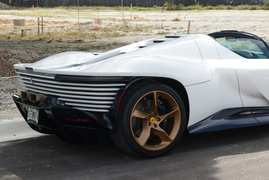
Unveiling the Apex Predators of the Automotive Realm: A Deep Dive into the World’s Most Powerful Cars
The automotive landscape of 2025 is a breathtaking testament to human ingenuity, where the pursuit of power has transcended mere transportation to become an art form. In an era defined by the convergence of electric propulsion, hybrid systems, and the relentless refinement of the internal combustion engine, the definition of a “powerful car” has evolved dramatically. Gone are the days when raw horsepower was the sole metric of dominance; today, true automotive supremacy is a complex tapestry woven from cutting-edge technology, aerodynamic mastery, sustainable innovation, and a driving experience that borders on the supernatural.
For the discerning enthusiast or the astute collector, the question of “which car is the most powerful in the world?” opens a Pandora’s box of engineering marvels. From hyper-electric speedsters that obliterate established benchmarks to hybrid behemoths that blend brute force with everyday usability, the market is currently experiencing an unprecedented surge in performance capabilities. This comprehensive analysis delves deep into the current pantheon of automotive excellence, offering an insider’s perspective on the machines that are rewriting the rulebook of high-performance motoring. We will explore the technical specifications, the design philosophies, and the unique propositions that make each of these vehicles a legend in its own right, providing the clarity needed to navigate this elite echelon of automotive engineering.
The Definitive Registry of Automotive Powerhouses
To truly appreciate the current state of automotive evolution, one must first understand the benchmark against which all contenders are measured. The following table represents the pinnacle of current production and limited-run performance vehicles, showcasing the staggering figures that define the modern hypercar era.
| Vehicle Model | Peak Horsepower | Drivetrain Configuration | Estimated Base Price (USD) | Key Technological Innovation |
| :— | :— | :— | :— | :— |
| Devel Sixteen | 5,007 hp | Quad-Turbo V16 | $1.75 Million | 16-Cylinder Engine Architecture |
| Koenigsegg Gemera | 2,300 hp | Hybrid (3-Cyl ICE + Electric) | $1.7 Million | Tiny Friendly Giant (TFG) Engine |
| Lotus Evija | 2,011 hp | Quad Electric Motors | $2.4 Million | Carbon Monocoque Chassis |
| Rimac Nevera | 1,914 hp | Quad Electric Motors | $2.2 Million | AI-Powered Dynamic Systems |
| Hennessey Venom F5 | 1,817 hp | Twin-Turbo V8 | $2.1 Million | Aerodynamic Efficiency at >300 mph |
| Bugatti Tourbillon | 1,800 hp | Hybrid (V16 + Electric) | $4.3 Million | Analog-Digital Integration |
| Koenigsegg Jesko Absolut | 1,600 hp | Twin-Turbo V8 | $2.8 Million | Aerodynamic Drag Reduction |
| McLaren Speedtail | 1,035 hp | Hybrid (V8 + Electric) | $2.2 Million | Three-Seat Hyper-GT Design |
| Porsche Taycan Turbo GT | 1,034 hp | Dual Electric Motors | $230,000 | 800V Architecture |
| Tesla Model S Plaid | 1,020 hp | Tri-Motor AWD | $90,000 | Software-Defined Performance |
Note: Prices are approximate, subject to regional taxes, bespoke configurations, and market fluctuations. The Devel Sixteen remains largely a concept/prototype, with verifiable production figures pending.
The Devel Sixteen: A Hyper-Engineering Anomaly
Emerging from the shadows of Dubai’s ambitious automotive scene, the Devel Sixteen remains the ultimate unicorn in the realm of automotive power. Its claim of 5,007 horsepower from a quad-turbocharged V16 engine is a figure that defies conventional engineering logic, pushing the boundaries of what is physically achievable. While its road-legal status and production reality have been subjects of debate within the industry, its conceptual impact is undeniable.
Technical Deep Dive:
At the heart of the Sixteen lies a V16 engine, a configuration usually reserved for bespoke race cars or one-off commissions, not road-legal production vehicles. Devel’s audacious engineering feat involves turbocharging this massive powerplant to an extent that would make Formula 1 engineers blush. This setup is designed to deliver a staggering amount of air and fuel into the combustion chambers, generating power figures that blur the line between automotive performance and jet propulsion.
The Driving Experience (Theoretical):
Driving the Sixteen would be an exercise in raw, unfiltered sensory overload. The torque curve would likely be so aggressive that it would render traditional traction control systems obsolete. It is not a car designed for the track or the twisties; it is a statement of intent, a declaration that automotive engineering knows no limits. The chassis and aerodynamics, while highly advanced, are secondary to the sheer brutality of the engine.
Market Positioning:
The Sixteen is not for the faint of heart or the budget-conscious. Its price tag reflects its status as a bespoke, hand-built marvel. It appeals to the collector who already owns a Bugatti, a Koenigsegg, and a Rimac, and is looking for the one vehicle that can top every other car in their garage purely on a horsepower metric.
The Koenigsegg Gemera: Practical Hyper-Performance Redefined
Christian von Koenigsegg has always marched to the beat of his own drum, and the Gemera is perhaps his most revolutionary creation yet. Dubbed a “Mega-GT,” it challenges the notion that hypercars must be single-seat, impractical machines. With room for four full-sized adults and their luggage, the Gemera proves that extreme performance and everyday usability can coexist harmoniously.
Technical Deep Dive:
The Gemera’s powertrain is a masterclass in downsizing and hybridization. It features a Tiny Friendly Giant (TFG) engine—a compact 2.0-liter three-cylinder unit equipped with a revolutionary Freevalve intake system. This engine, in combination with three electric motors, produces a combined output of 2,300 horsepower. The torque vectoring provided by the electric motors is so precise that the car can seemingly defy the laws of physics through corners.
The Driving Experience:
Koenigsegg’s engineering philosophy emphasizes a \”feel\” that connects the driver to the machine. The Gemera offers a driving experience that is both exhilarating and surprisingly comfortable. The hybrid system allows for silent electric cruising around town, while the full combustion system unleashes hell when the road opens up. The interior is a sanctuary of Scandinavian design—minimalist, luxurious, and packed with innovative features like heated and cooled cup holders.
Market Positioning:
The Gemera targets a niche that craves both exclusivity and practicality. It is the perfect vehicle for a weekend getaway with family or a high-speed run on the Autobahn. Its rarity (limited to 300 units) ensures its collectibility, while its innovative technology guarantees its relevance in the rapidly evolving automotive landscape.
The Lotus Evija: The Electric Purity of British Engineering
Lotus has long been synonymous with lightweight, driver-focused performance. The Evija represents the brand’s bold foray into the realm of electric hypercars, proving that the Lotus DNA of handling purity can thrive in a battery-powered future.
Technical Deep Dive:
The Evija is a technical tour de force, boasting 2,011 horsepower from four independent electric motors, one driving each wheel. This setup enables unprecedented levels of torque vectoring, allowing the car to adjust power distribution to each wheel in real-time for optimal grip and handling. The chassis is a single-piece carbon fiber monocoque, making the Evija one of the lightest production electric cars ever conceived.
The Driving Experience:
Lotus prioritized the driving experience above all else. The Evija is designed to feel alive and connected, a trait that has been lost in some of the heavier, more powerful electric competitors. The instant torque delivery is visceral, pinning occupants to their seats, while the advanced aerodynamics manage airflow through the unique \”hollow\” bodywork to reduce drag and increase downforce.
Market Positioning:
The Evija is a statement piece for the environmentally conscious collector who refuses to compromise on performance. It bridges the gap between traditional supercar values and the electric future, offering a driving experience that is both electrifying and refined.
The Rimac Nevera: The Digital Supercar Benchmark
Mate Rimac’s vision has materialized into the Nevera, a Croatian-built electric hypercar that has shattered numerous performance benchmarks. It is a testament to what can be achieved when software engineers are given free rein to redefine automotive performance.
Technical Deep Dive:
The Nevera is powered by four independent electric motors, producing a combined output of 1,914 horsepower and a staggering 2,360 Nm of torque. What sets the Nevera apart is its sophisticated AI-powered Dynamic Chassis Control system, which utilizes an array of sensors to constantly monitor driving conditions and adjust the car’s parameters in milliseconds.
The Driving Experience:
The Nevera offers a driving experience that is both ferocious and accessible. Its straight-line acceleration is mind-bending, but it is