The Evolution of Automotive Excellence: A Deep Dive into the World’s Most Powerful Cars
The quest for automotive supremacy is a timeless narrative, one written in high-octane fuel, carbon fiber, and the relentless pursuit of speed. For decades, the horsepower wars have raged, pushing the boundaries of what engineers deem possible. This isn’t merely about creating faster vehicles; it’s a testament to human ingenuity, a canvas upon which the most audacious minds in the automotive industry paint their visions of the future. In 2025, this evolution continues unabated, with hybrid technology and electric powertrains challenging the long-held dominance of internal combustion engines.
From the thunderous roar of a V16 to the silent, electrifying surge of a hyper-EV, the modern landscape of high-performance motoring is more diverse and exhilarating than ever before. This guide will navigate the upper echelons of this rarefied air, exploring the machines that define the pinnacle of automotive engineering, analyzing their groundbreaking technologies, and understanding what makes them the most powerful cars in the world.
The Metrics of Might: Understanding Horsepower in 2025
Before delving into the specific marvels of engineering, it is crucial to understand the metrics by which these titans are measured. Horsepower, a term coined by James Watt in the late 18th century, is a unit of power equivalent to the power exerted by one horse lifting 550 pounds one foot in one second. In the context of modern hypercars, this definition serves as a mere baseline for the astronomical figures we now witness.
Today, the conversation extends beyond raw horsepower to encompass torque, power-to-weight ratios, and aerodynamic efficiency. A car with immense horsepower but poor weight distribution or excessive drag will falter on the track. The true masters of this domain, such as Bugatti and Koenigsegg, understand that brute force must be tempered with precision engineering. The integration of electric motors into traditional gasoline powertrains—hybridization—has become the new frontier, allowing manufacturers to achieve power outputs that were once unthinkable.
A New Paradigm: The Rise of Electric Hypercars
The most significant disruption in the hypercar segment in recent years has been the ascent of electric vehicles. Initially dismissed as incapable of matching the visceral thrill of gasoline engines, electric hypercars have silenced their critics with staggering performance figures. The instant torque delivery of electric motors provides a launch capability that traditional engines cannot replicate, allowing these machines to catapult from 0 to 60 mph in mere seconds.
This shift is not merely about speed; it represents a fundamental change in automotive philosophy. Electric hypercars are cleaner, quieter, and often more technologically advanced than their fossil-fuel counterparts. They rely on complex battery management systems and sophisticated thermal engineering to manage the immense heat generated during high-performance driving. As battery technology improves and charging infrastructure expands, the dominance of electric hypercars is set to continue, challenging the very definition of what constitutes a “powerful car.”
The Contenders: A Deep Dive into the World’s Most Powerful Cars
To fully appreciate the landscape of high-performance motoring, we must examine the specific vehicles that define this elite category. Each car represents a unique approach to the problem of achieving ultimate performance, blending cutting-edge technology with audacious design.
The Devel Sixteen: A Statement of Intent
Often regarded as the most powerful production car ever conceived, the Devel Sixteen is a testament to automotive ambition. With an eye-watering claim of 5,007 horsepower, this quad-turbocharged V16 engine pushes the very limits of internal combustion engineering. While production numbers remain limited, the mere existence of the Sixteen challenges our perception of what is mechanically possible. Its design, inspired by the lines of a fighter jet, hints at the extreme performance it offers. However, the Sixteen serves as a poignant reminder that in the pursuit of ultimate power, practicality often takes a backseat to engineering spectacle. This is a car that generates headlines and sparks debate, a true unicorn in the automotive world.
Koenigsegg Gemera: The Mega-GT Revolution
Christian von Koenigsegg has consistently redefined the boundaries of automotive engineering, and the Gemera is perhaps his most radical creation yet. Marketed as a “Mega-GT,” it combines the blistering performance of a hypercar with the practicality of a grand tourer. What makes the Gemera truly remarkable is its powertrain: a compact, three-cylinder Freevalve engine augmented by three electric motors, collectively producing 2,300 horsepower. This configuration allows for staggering acceleration—0 to 60 mph in just 1.9 seconds—while maintaining the ability to cruise comfortably over long distances. The Gemera represents the future of high-performance motoring, proving that extreme power does not have to come at the expense of usability. For those seeking a blend of raw power and refined luxury, the Gemera stands in a class of its own.
The Lotus Evija: Electrifying British Engineering
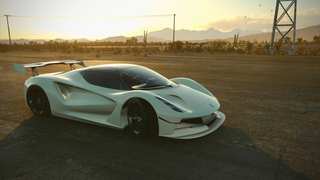
Lotus, a brand synonymous with lightweight, driver-focused sports cars, has entered the hypercar arena with the Evija. This all-electric masterpiece is a stunning example of how traditional automotive values can be translated into the electric era. With a targeted output of 2,011 horsepower, the Evija is one of the most powerful production cars in the world. Its carbon fiber monocoque chassis ensures a low curb weight, allowing the immense power to be deployed with surgical precision. The Evija’s design is a masterclass in aerodynamic efficiency, with a focus on generating downforce while minimizing drag. For purists who appreciate the art of driving, the Evija offers an electrifying experience that honors Lotus’s heritage while forging a new path for the brand.
The Rimac Nevera: Croatia’s Electric Champion
Hailing from Croatia, Rimac Automobili has rapidly established itself as a leader in the field of electric hypercars. The Nevera is the culmination of years of research and development, a vehicle that has shattered multiple performance records. With a staggering 1,914 horsepower delivered through four independent electric motors, the Nevera offers unprecedented levels of control and agility. Its advanced torque vectoring system allows for precise management of power distribution to each wheel, enabling drivers to exploit the car’s full potential with confidence. The Nevera is not merely a fast car; it is a technological tour de force, showcasing the transformative potential of electric powertrains in the hypercar segment.
The Hennessey Venom F5: The American Contender
Hennessey Performance Engineering, based in Texas, has long been known for its extreme tuning capabilities. With the Venom F5, the company has moved beyond modification to create a bespoke hypercar designed to break the 300 mph barrier. Powered by a twin-turbocharged V8 engine producing 1,817 horsepower, the Venom F5 is a brutalist masterpiece of speed. Its lightweight carbon fiber construction and aerodynamic design are optimized for high-speed stability. The Venom F5 represents the American spirit of automotive innovation—a relentless pursuit of performance for its own sake. For those who crave raw, untamed power, the Venom F5 delivers an experience that is both exhilarating and intimidating.
The Bugatti Tourbillon: A New Era of Hybrid Power
Bugatti, a name synonymous with luxury and speed, has ushered in a new era with the Tourbillon. This V16-powered hybrid hypercar represents a bold step forward for the iconic French brand. While it retains the elegance and craftsmanship that Bugatti is known for, the Tourbillon incorporates cutting-edge hybrid technology to deliver 1,800 horsepower. The integration of electric motors allows for instant torque delivery and improved efficiency, demonstrating that hybrid powertrains can enhance, rather than detract from, the hypercar experience. The Tourbillon is a testament to Bugatti’s ability to evolve while staying true to its heritage, a fitting successor to the legendary Chiron.
The Koenigsegg Jesko Absolut: Engineered for Ultimate Speed
Koenigsegg’s quest for ultimate top speed reaches its zenith with the Jesko Absolut. While the standard Jesko is a formidable track machine, the Absolut variant is optimized for straight-line speed, with a lower drag coefficient and a higher theoretical top speed. Powered by a 1,600-horsepower twin-turbocharged V8 engine, the Jesko Absolut is a marvel of aerodynamic engineering. Its long tail design and active aerodynamics minimize drag, allowing the car to slice through the air with unprecedented efficiency. The Jesko Absolut represents Koenigsegg’s commitment to pushing the boundaries of what is possible, a car designed not just to be fast, but to be the fastest.
The McLaren Speedtail: The Ultimate Grand Tourer
McLaren has long been a leader in the field of high-performance automobiles, and the Speedtail represents the pinnacle of its engineering prowess. With a design inspired by the iconic McLaren F1, the Speedtail is a hyper-GT that combines extreme performance with luxurious comfort. Its unique three-seat configuration, with the driver positioned in the center, harks back to its legendary predecessor. The Speedtail’s hybrid powertrain delivers 1,035 horsepower, enabling it to achieve a top speed of over 250 mph. This is a car that is as comfortable on a long-distance journey as it is on a racetrack, a true testament to McLaren’s ability to blend performance and luxury.
The Porsche Taycan Turbo GT: Electrifying Precision
Porsche has long been synonymous with driving excellence, and the Taycan Turbo GT is the latest embodiment of this philosophy. This all-electric performance car delivers 1,034 horsepower, combining the instant torque of electric motors with Porsche’s renowned handling dynamics. The Turbo GT variant is the most powerful production Taycan to date, with a focus on track performance. Its lightweight construction and aerodynamic design make