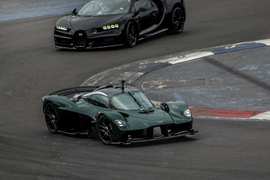
America’s Most Powerful Production Cars: The 2025 Hypercar Showdown
The roar of American engineering echoes louder than ever in 2025, as domestic automakers redefine the very limits of automotive performance. Forget your grandfather’s V8 muscle cars; the modern American hypercar is a symphony of cutting-edge technology, aerospace-grade materials, and raw, unadulterated power. This isn’t just about going fast—it’s about rewriting the laws of physics, blending brutal horsepower with surgical precision.
In the competitive landscape of 2025, American manufacturers have emerged not just as contenders, but as outright leaders, challenging the established European order. With production numbers limited and engineering budgets rivaling small nations, these machines represent the pinnacle of what’s possible when innovation meets obsession. From the electric juggernauts of California to the hybrid marvels of the Midwest, here’s the definitive guide to America’s most powerful production cars.
The 10 Most Powerful American Production Cars in 2025
The horsepower wars have reached a fever pitch, but this year, the narrative has shifted. It’s no longer just about internal combustion; it’s about the seamless integration of electric power, advanced aerodynamics, and chassis technology that borders on science fiction. These are the vehicles that will define the next decade of automotive excellence.
Czinger 21C Blackbird Edition: $2.8 Million
Horsepower: 1,350 hp
The Czinger 21C Blackbird Edition isn’t just a car; it’s a statement of intent from the heart of Los Angeles. Representing a radical departure from traditional manufacturing, Czinger utilizes cutting-edge 3D-printing technology to create a hypercar that seems to defy the laws of material science. The Blackbird Edition pays homage to the iconic SR-71 reconnaissance aircraft, translating its stealthy, aerodynamic profile into a road-legal machine that commands attention.
Engineering Masterclass:
At the heart of the 21C lies a mid-mounted 2.88-liter twin-turbocharged V8, augmented by a pair of electric motors. This hybrid setup churns out a staggering 1,350 horsepower and over 1,000 lb-ft of torque, channeled through a 7-speed automated sequential transmission. But the real magic lies in the chassis. Czinger’s additive manufacturing process allows for the creation of complex, lightweight structures that would be impossible with traditional methods. The result is a carbon fiber monocoque that’s both incredibly rigid and astonishingly light, weighing in at just under 2,900 pounds.
Aerodynamic Supremacy:
The Blackbird’s design is a masterclass in aerodynamic efficiency. Every curve, vent, and wing has been optimized through advanced computational fluid dynamics to generate massive downforce—up to 4,400 pounds at 190 mph. This allows the 21C to corner with the precision of a fighter jet, while its 0-60 mph time of under 2 seconds makes it one of the quickest cars on the planet.
Exclusivity Defined:
Production of the 21C is strictly limited, with only 80 examples planned, and just four of those being the Blackbird variant. This exclusivity, combined with the revolutionary technology under the skin, makes the Blackbird one of the most sought-after hypercars of the decade.
Hennessey Venom F5: $2.7 Million
Horsepower: 1,817 hp
Texas-based Hennessey Performance Engineering has long been synonymous with raw, untamed American power, and the Venom F5 is the culmination of that legacy. This isn’t a hybrid—it’s a pure, unadulterated internal combustion machine designed with a singular focus: breaking speed records. Named after the most powerful category of tornadoes, the F5 is built to unleash meteorological levels of force upon the asphalt.
The Heart of the Beast:
Under the carbon fiber skin lies the “Fury” engine, a 6.6-liter twin-turbocharged V8 that produces a mind-bending 1,817 horsepower. This isn’t a retuned production engine; it’s a bespoke powerplant designed from the ground up for extreme performance. Paired with a 7-speed single-clutch automated manual transmission, all that power is sent to the rear wheels, creating a visceral, analog driving experience that’s increasingly rare in the age of electrification.
Aerodynamic Precision:
To handle speeds exceeding 311 mph, the Venom F5 features a carbon fiber monocoque that weighs a mere 190 pounds, keeping the car’s dry weight under 3,000 pounds. Active aerodynamics, including a deployable rear wing and adjustable suspension, work in harmony to maintain stability at velocities that would humble most aircraft. The result is a power-to-weight ratio that stands among the best in the world.
Record-Breaking Ambitions:
Hennessey isn’t just aiming for high numbers; they’re chasing the production car land speed record. With a targeted top speed well over 311 mph, the Venom F5 represents the apex of American hypercar engineering, proving that there’s still room for the internal combustion engine at the very top of the automotive pyramid.
Pininfarina Battista: $2.2 Million
Horsepower: 1,877 hp
When the legendary Italian design house Pininfarina decides to build its own car, the result is nothing short of automotive art. The Battista is a testament to that heritage, blending 90 years of design excellence with the most advanced electric powertrain technology available. Built in Cambiano, Italy, the Battista is a grand touring hyper EV that proves electric performance can be both beautiful and brutally fast.
Rimac-Powered Brilliance:
At the heart of the Battista lies the same revolutionary quad-motor electric drivetrain found in the Rimac Nevera. This system produces a staggering 1,877 horsepower and 1,726 lb-ft of torque, distributed across all four wheels with sub-millisecond precision. The carbon fiber monocoque chassis, a marvel of modern engineering, provides the structural rigidity needed to handle this immense power while keeping weight in check.
Italian Elegance Meets Extreme Performance:
While the Battista shares its bones with the Nevera, its soul is pure Pininfarina. The exterior is a masterclass in flowing lines and aerodynamic efficiency, with a design that seems sculpted by the wind itself. Inside, the cabin is a sanctuary of luxury and technology, featuring bespoke materials, artisan craftsmanship, and an intuitive interface that puts the driver in complete control.
A New Era of Electric Luxury:
With a 0-60 mph time of under 1.8 seconds and a top speed of 217 mph, the Battista delivers performance that rivals the best hypercars on the planet. But it’s the way it delivers that performance that sets it apart—with a grace, elegance, and refinement that only Pininfarina can achieve. Production is limited to 150 examples, each a rolling work of art that represents the future of automotive luxury.
Lotus Evija: $2.3 Million
Horsepower: 1,972 hp
Lotus has built its legendary reputation on the philosophy of founder Colin Chapman: “Simplify, then add lightness.” The Evija takes that ethos into the electric age, proving that even a hypercar can maintain the dynamic purity that defines the Lotus brand. This isn’t just an electric car; it’s the embodiment of Lotus DNA—lightweight, agile, and utterly thrilling to drive.
Quad-Motor Precision:
The Evija is powered by four independent electric motors, one at each wheel, delivering a combined 1,972 horsepower. This all-wheel-drive system allows for unprecedented torque vectoring, enabling the car to adjust power distribution to each wheel in milliseconds. The result is a level of agility and cornering performance that belies the car’s substantial power output.
Aerodynamic Innovation:
Lotus has pushed the boundaries of aerodynamic design with the Evija, creating a body that’s both stunningly beautiful and aerodynamically brilliant. The car features a dramatic tunnel design that channels air through the body, generating significant downforce while maintaining a sleek, flowing profile. This active aerodynamic system, combined with the carbon fiber monocoque chassis, ensures the Evija remains composed and stable at speeds exceeding 200 mph.
A New Benchmark:
With a 0-60 mph time of under 3 seconds and a top speed of 217 mph, the Evija sets a new benchmark for electric hypercar performance. Yet, despite its extreme capabilities, it remains true to the Lotus spirit of driver engagement, offering a visceral, connected experience that’s both thrilling and refined. Only 130 examples will be produced, each representing the pinnacle of British automotive engineering.
Aspark Owl: $3.2 Million
Horsepower: 1,984 hp
The Aspark Owl doesn’t just look different—it challenges every preconception about what a production car can be. Developed by Japanese engineering firm Aspark and built by Manifattura Automobili Torino in Italy, the Owl is a testament to what’s possible when innovation knows no bounds. With a profile so low it seems to defy gravity, this electric hypercar redefines the very concept of