The Ultimate Guide to the World’s Most Powerful Production Cars
In today’s automotive landscape, the definition of a “fast car” has been completely redefined. For decades, achieving mind-bending speeds was the ultimate benchmark for a production car. However, with ever-stricter emissions regulations and advancements in powertrain technology, the focus has shifted dramatically. Today, the ultimate measure of automotive prowess is absolute power. We’re witnessing an era where hybrid systems, colossal turbochargers, and cutting-edge electric drivetrains are pushing horsepower figures well beyond the once-mythical 1,000-hp barrier.
This isn’t just about raw numbers on a spec sheet; it’s about the visceral experience these machines deliver. The feeling of being pressed back into your seat as a hybrid system seamlessly blends electric torque with combustion might, or the eerie silence of two thousand electric ponies launching you toward the horizon, is something few will ever experience. For the discerning enthusiast, these hypercars represent the pinnacle of automotive engineering, blending race-bred technology with road-legal requirements.
But which of these incredible machines reigns supreme? We’ve compiled a list of the ten most powerful production cars on the planet, ranked in ascending order of their mind-blowing horsepower figures. Prepare to have your perception of what a road car can do completely shattered.
Ferrari SF90 XX Stradale — 1,030 hp
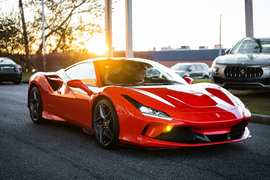
Maranello’s entry into this exclusive club might be the most “accessible” on the list, but don’t let that fool you. The Ferrari SF90 XX Stradale represents the first time the legendary Italian marque has taken its street-legal SF90 platform and injected it with the kind of extreme engineering typically reserved for its XX track-only programs. It’s a stunning blend of hybrid power and race-car aerodynamics.
At its heart lies a 4.0-litre twin-turbocharged V8 engine, the same core unit found in the standard SF90. However, in the XX iteration, Ferrari engineers have squeezed every last drop of performance from the combustion engine, boosting its output to a staggering 797 hp. But the V8 is only part of the equation. This powerhouse is augmented by three electric motors—one on the rear axle and two on the front—which contribute an additional 233 hp. The result is a combined output of 1,030 hp, capable of launching this mid-engined marvel from 0 to 60 mph in a breathtaking 2.3 seconds.
What truly sets the SF90 XX Stradale apart is its aggressive aerodynamic package. Drawing heavily from GT3 racing technology, it features a fixed carbon fibre roof, a massive swan-neck rear wing that generates significant downforce, and a redesigned front splitter and diffuser. These aerodynamic enhancements aren’t just for show; they are crucial for maintaining stability at the car’s staggering top speed of over 211 mph.
Inside, the cabin has been stripped down to its essence, focusing on the driving experience. Lightweight carbon fibre bucket seats, a racing-style steering wheel, and minimal creature comforts underscore the car’s hardcore nature. Yet, it remains fully street-legal, offering a level of performance that blurs the line between road car and race car. The SF90 XX Stradale is a testament to Ferrari’s ability to extract extreme performance from a hybrid system, proving that electrification can enhance, rather than compromise, the pure driving thrill.
Aston Martin Valkyrie — 1,160 hp
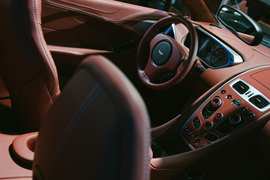
The Aston Martin Valkyrie isn’t just a car; it’s a statement. A bold declaration of intent from the legendary British marque, co-developed with the undisputed titans of Formula 1 aerodynamics, Adrian Newey and Red Bull Racing Advanced Technologies. The result is a machine that looks like it was beamed directly from a Le Mans prototype race and landed on the street.
Powering this aerodynamic marvel is a naturally aspirated 6.5-litre Cosworth V12 engine. In an era dominated by turbochargers and electric motors, the Valkyrie’s commitment to a high-revving, pure combustion engine is something to be celebrated. This magnificent powerplant produces a spine-tingling 1,000 hp on its own, revving all the way to an ear-splitting 11,100 rpm. To further enhance performance and provide crucial torque-fill, a Rimac-sourced KERS-style hybrid system adds an additional 160 hp.
The synergy between the V12 and the electric motor is remarkable. The KERS system provides an instant burst of torque when the driver needs it most, filling the gaps in the V12’s power delivery and ensuring seamless, relentless acceleration. This combination, when combined with the Valkyrie’s featherlight kerb weight of just 2,270 lbs (1,030 kg), allows for mind-boggling performance figures. 0 to 60 mph is dispatched in under 2.5 seconds, and the car can achieve a top speed exceeding 250 mph.
However, the Valkyrie’s true genius lies in its aerodynamics. Adrian Newey’s signature approach is evident everywhere, from the massive underbody diffuser that generates an astonishing 2,600 lbs (1,100 kg) of downforce at just 150 mph to the sculpted bodywork that channels air with surgical precision. This isn’t just a fast car; it’s a car that generates its own downforce, allowing it to corner with levels of grip that defy conventional physics. The Valkyrie is a purebred racing machine homologated for the road, offering an unfiltered, visceral driving experience that pushes the boundaries of what’s possible.
Koenigsegg Jesko — 1,280 hp
When you hear the name Koenigsegg, you expect hyper-performance, and the Jesko delivers in spades. Designed by Christian von Koenigsegg himself, the Jesko is a testament to Swedish ingenuity and an unwavering commitment to pushing the limits of internal combustion engineering. This is a car built for one purpose: ultimate speed.
At the heart of the Jesko lies a 5.0-litre twin-turbocharged V8 engine, a masterpiece of engineering that showcases Koenigsegg’s obsession with detail. What makes this engine truly special is its 12-kg flat-plane crankshaft, a design typically reserved for high-revving race cars. This lightweight crank allows the engine to rev more freely and respond more eagerly to throttle inputs. Furthermore, the Jesko features innovative “anti-lag” technology for its turbochargers, ensuring that power delivery is instantaneous, with virtually no turbo lag.
On standard pump gasoline, the Jesko’s V8 produces a formidable 1,280 hp. However, for those who seek the absolute maximum performance, the car is designed to run on E85 biofuel, which unleashes the full might of the engine, boosting its output to an astonishing 1,600 hp. This dual-fuel capability provides drivers with the flexibility to choose between road-legal pump gas and track-ready biofuel.
The Jesko’s transmission is another engineering marvel. Dubbed the “Light-Speed Transmission,” it features nine forward gears and utilizes a unique clutch system that allows for lightning-fast shifts in as little as 20 milliseconds—without the need for traditional synchronizers. This creates a seamless, uninterrupted surge of power that pins you to your seat.
To achieve its mind-boggling top speed potential, the Jesko is available in two distinct variants. The High-Downforce version, equipped with a massive rear wing that generates 3,000 lbs (1,400 kg) of downforce at 170 mph, is designed for track dominance. The Absolut version, in contrast, features a smoother, more aerodynamic body with a significantly smaller wing, optimized for straight-line speed. Koenigsegg claims a theoretical top speed of over 310 mph (500 km/h) for the Absolut, making it a serious contender for the title of the world’s fastest production car.
Koenigsegg Regera — 1,500 hp
Before the Jesko took the spotlight, the Koenigsegg Regera held the title of the most powerful hybrid hypercar in the world. Even today, its engineering brilliance remains astonishing. The Regera, Swedish for “to rule,” is a car that redefines the concept of a grand touring hypercar—one that combines brutal performance with unprecedented luxury and innovative technology.
What makes the Regera truly unique is its revolutionary powertrain. Koenigsegg made the radical decision to ditch the traditional gearbox entirely. Instead, the Regera features a direct-drive system that links the 1,100-hp twin-turbo V8 engine directly to the rear wheels via a fixed 2.73:1 ratio. This might sound unusual, but when combined with three electric motors—one on the crankshaft and one on each rear wheel—the system delivers a staggering 2,000 Nm (1,475 lb-ft) of torque to the pavement.
The absence of a traditional gearbox eliminates the pauses and interruptions associated with gear changes, creating a seamless and relentless surge of acceleration. The Regera’s 0-60 mph time is a blistering 2.8 seconds, but it’s the 0-400 km/h (0-249 mph) time that truly showcases its prowess: an incredible 22.8 seconds. This is thanks to the electric motors providing instant torque from a standstill, filling in the low-end gaps