2026 New Car Launches: Must-Know Models, Future EVs, and Top Model Picks
As the automotive calendar turns to 2026, excitement builds for a new slate of vehicle debuts and first drives. The next twelve months promise a diverse lineup, featuring everything from eco-friendly commuters to high-performance marvels. While electric vehicles (EVs) are leading the charge with several significant launches, petrol-powered options remain crucial. Enthusiasts will rejoice as traditional engines make their comeback in exciting forms.
The automotive landscape is witnessing a shift toward sustainable transportation, yet performance remains a priority. Consumers are increasingly seeking vehicles that combine efficiency with power, often demanding the refinement of plug-in hybrid (PHEV) powertrains. While the market explores new solutions, many established manufacturers continue to develop advanced ICE vehicles, ensuring a balanced and compelling choice for buyers.
This comprehensive guide explores the most significant new vehicle launches slated for 2026 and beyond, detailing upcoming models from major automakers.
Electric Sports Cars: A New Era of Performance
The world of high-performance automobiles is undergoing a profound transformation. Once thought to be the domain of gasoline engines, sports cars are increasingly embracing electric power. However, the development of electric sports cars has been a challenging endeavor, as manufacturers strive to replicate the visceral thrill of internal combustion engines.
Porsche 718 Cayman and Boxster: Porsche’s mid-engine sports car trio, the 718 Cayman and Boxster, were initially slated for electrification. However, Porsche recently made a U-turn, confirming that the range-topping GT4 and RS models will retain gasoline engines. This reversal follows extensive modifications to the car’s EV-dedicated architecture, likely caused by changing market expectations for enthusiasts who favor the engine sound and traditional mechanics. While electric versions will still be available with batteries behind the passenger cell for ideal weight distribution, the focus on the GT4 and RS models highlights the emotional connection enthusiasts have with petrol power.
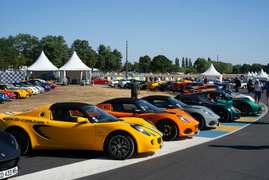
Lotus Emira: Originally scheduled to end production in 2027, the Lotus Emira has received an indefinite stay of execution. The British-built sports car will now feature two new powertrains: a plug-in hybrid setup and an “upgrade” to the V6 engine, potentially extending its lifespan beyond the decade. The hybrid configuration is expected to mirror that of the Ferrari 296 GTB and other supercars, using electric motor generators shoehorned between the engine and transmission to boost power while harvesting energy for a modest battery.
McLaren W1: Following consecutive Formula One constructors’ championships, McLaren has unveiled the W1, positioned as a successor to the legendary F1 and P1 hypercars. A direct rival to the Ferrari F80 (released last year), the W1 features a twin-turbo 4.0-liter V8 hybrid powertrain sending its 1,258 horsepower to the rear wheels. The Formula One-inspired ground-effect aerodynamics can generate 1,000 kg of downforce at 174 mph. The combined result is the fastest-accelerating, fastest-lapping, road-legal machine McLaren has ever produced.
Toyota GR GT: This new sports coupe, known as the GR GT, represents Toyota’s most jaw-dropping vehicle to date, directly challenging models like the Mercedes-AMG GT, Aston Martin Vantage, and Porsche 911 Turbo S. Inspired by the Lexus LFA and Toyota 2000 GT, the GR GT is a bespoke creation built from the ground up. It features a new twin-turbo cross-plane-crank 4.0-liter V8 engine integrated with an electric motor to reduce lag and deliver a combined 641 horsepower and 850 Nm of torque. Toyota prioritized a function-over-form approach, as the car was designed with the intention of being transformed into a GT3 race car—a design achievement that gloriously coincided with the road-going version’s stunning aesthetics.
Premium EVs: Luxury and Cutting-Edge Technology
The premium market is witnessing a wave of new fully electric vehicles, offering a compelling alternative to traditional luxury cars. These models emphasize advanced technology, superior refinement, and luxurious interiors, setting a new standard for the segment.
Jaguar Four-Door GT: After more than a year of anticipation, Jaguar’s four-door electric GT is set for a major reveal this summer. The design follows the polarizing Type 00 concept, featuring a bespoke EV platform called the Jaguar Electrified Architecture and a tri-motor powertrain delivering around 1,000 horsepower. The real-world range is expected to reach approximately 400 miles, with lightning-fast charging capabilities allowing 200 miles of range to be added in roughly 15 minutes. This luxurious four-door saloon is estimated to cost at least £120,000.
Aston Martin Valhalla: The Aston Martin Valhalla is notable for being the first series-production mid-engine road car in the company’s 112-year history. Production will be limited to just 999 units, powered by a bespoke 4.0-liter twin-turbo flat-plane V8 engine and a pair of electric motors. The total power output is rated at 1,069 horsepower and 1,100 Nm of torque, capable of propelling the car from 0 to 62 mph in 2.5 seconds. The active aerodynamics are inspired by the company’s Valkyrie hypercar, incorporating Formula One know-how and technology.
Alfa Romeo Giulia: The next-generation Alfa Romeo Giulia aims to live up to the high expectations set by its predecessor, which remains one of the most desirable compact executive saloons available. While the exact arrival date of the BMW 3 Series rival is uncertain, it will be offered with a choice of combustion or pure-electric power. A Quadrofoglio version with a petrol engine, most likely the brand’s famous V6, is also planned.
Alfa Romeo Stelvio: The next-generation Alfa Romeo Stelvio SUV was initially scheduled for reveal in the second half of 2025, but it is now reportedly not arriving until sometime in 2027. It will be based on the STLA Large architecture and offered with a choice of hybridised petrol engines and electric powertrains. As with the Giulia, the new Stelvio Quadrofoglio is expected to feature a V8 engine.
Next-Generation EVs: Revolutionary Technology and Design
The 2026 lineup features several revolutionary electric vehicles that challenge existing market norms with advanced technology and distinctive styling.
BMW i3: Among the 40 new and updated models BMW plans to launch by 2027 as part of its new ‘Neue Klasse’ era, the most significant will arguably be the next evolution of the iconic BMW 3 Series saloon. There will still be combustion-powered versions and a seriously potent new M3 performance edition, but the main focus is on the fully electric model, called the i3—the name previously worn by the brand’s pioneering zero-emission city car. The new i3 will utilize the same cutting-edge EV platform and technology as the iX3, offering more than 500 miles of range and the engaging handling expected of a BMW. This ultra-futuristic saloon will feature the same bold design language seen in the iX3 and a fresh interpretation of BMW’s iconic kidney grilles, along with a radical Panoramic iDrive cockpit.
BMW iX3: The all-new, second-generation BMW iX3 represents the beginning of a bold new era for the Bavarian brand. It introduces a more restrained yet still futuristic design language, a brand-new platform, and cutting-edge technology. From the battery cells providing a world-leading 500-mile range to a radical new Panoramic iDrive cockpit, the iX3 is impressive both on paper and in practice. We awarded it our highest possible five-star rating after driving the landmark SUV for the first time recently. It is available to order now starting from less than £60,000.
Honda 0 Series Saloon: Honda, which has been relatively slow to the EV market, is preparing to launch its 0 Series—a diverse range of seven brand-new electric vehicles scheduled for release over the next few years. The first 0 Series model will be an SUV, followed closely by a futuristic flagship saloon that resembles a Lamborghini Gallardo from another dimension. The wedge-shaped design will be underpinned by a new, bespoke architecture built on a core philosophy of being “light, thin and wise”.
Hyundai Ioniq 3: This is the next addition to Hyundai’s range of futuristic, fully electric models: the Ioniq 3 family hatchback. Set to debut this year, it will compete with the Volkswagen ID.3, Renault Megane, and Cupra Born. The Concept Three unveiled at the 2025 Munich Motor Show showcases the brand’s direction: a sporty, bold design rather than a plain appearance, combined with excellent battery technology and a high-performance Ioniq 3 N version.
Nissan Juke: Like it or loathe it, the Nissan Juke remains a highly significant model in the UK market, making the arrival of its next generation a major event. The small SUV is expected to retain its distinct sense of style, featuring plenty of sharp angles and a new interpretation of the Juke’s signature cartoonishly large headlights. Underpinning the new Juke will be the same CMF-EV platform as the next-generation Leaf, which went on sale last year. It will utilize the same battery and motor combinations, meaning certain versions could offer well over 350 miles of range