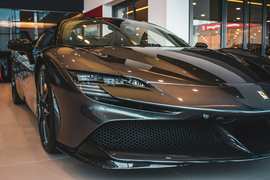
The 2025 Performance Car Revolution: Why Today is the Golden Age of Horsepower
Think the 1960s were the peak of automotive excitement? Think again. While the Muscle Car era certainly had its charm, the reality is that we are living through the most incredible period in performance vehicle history. Never before has such a diverse range of vehicles—from family sedans to hardcore track machines—offered accessible horsepower figures that were once the exclusive domain of multi-million dollar supercars.
Today, the 500 horsepower threshold is no longer a barrier reserved for the world’s most expensive exotics. It’s a benchmark that everyday vehicles are shattering with ease. Consider this: a standard production sedan can now out-accelerate some of the most iconic supercars of the past, purely thanks to the leaps in engineering we’ve witnessed in the last decade.
For seasoned automotive journalists and industry veterans like myself, this era is nothing short of revolutionary. After ten years immersed in the world of high-performance vehicles, I’ve seen firsthand how quickly the definition of “fast” has evolved. What was once considered extreme is now commonplace. This isn’t just a trend; it’s a fundamental shift in what manufacturers are willing to offer the public.
In this comprehensive guide, we’ll explore the current landscape of high-performance vehicles, focusing on models that deliver over 500 horsepower. We’ll delve into the technology that makes this possible, the value propositions of these machines, and why this moment in automotive history is truly one for the record books.
The 500+ Horsepower Benchmark: A New Standard
Not long ago, achieving 500 horsepower was a monumental task. It required specialized engineering, often involving forced induction or exotic materials. These vehicles were typically one-dimensional: brutally fast in a straight line but often compromised in terms of comfort, usability, or practicality. They were the domain of the ultra-wealthy, the dedicated track enthusiast, or the eccentric collector.
Fast forward to 2025, and the narrative has completely changed. The same horsepower figure is now accessible in vehicles that can serve as daily drivers, family haulers, or comfortable touring cars. This democratization of power is thanks to several converging factors:
Advanced Powertrain Technology
The most significant driver of this change is the evolution of the internal combustion engine. Turbocharging and supercharging technologies have matured to the point where manufacturers can extract massive power figures from relatively small displacement engines. This not only increases performance but also improves efficiency and reduces emissions—critical factors in meeting modern regulatory standards.
The SUV Revolution
The rise of the performance SUV has fundamentally altered the market. Consumers demanded the utility of an SUV but didn’t want to sacrifice the driving thrills of a sports car. Manufacturers responded by stuffing supercar-level powertrains into high-riding platforms. This segment, once an afterthought, is now one of the most exciting battlegrounds for horsepower supremacy.
Electrification’s Influence
While this list focuses on traditional internal combustion engines, it’s impossible to ignore the impact of electric vehicle technology. The instant torque and brutal acceleration of EVs have pushed traditional manufacturers to raise their game. To compete, gasoline-powered cars needed more power than ever before to maintain their relevance in the performance conversation.
Modular Platform Architectures
Modern automotive engineering relies heavily on modular platforms. A single underlying chassis can be adapted for multiple vehicles, from economy cars to high-performance flagships. This allows manufacturers to scale performance components—like high-output engines and advanced suspension systems—across their entire lineups more cost-effectively.
The Value Proposition: More Power for Less Money
One of the most compelling aspects of the current market is the incredible value proposition. When you compare the price of a 500+ horsepower car today versus 15 or 20 years ago, the difference is staggering. You can now purchase a vehicle with more power than a Ferrari Enzo for a fraction of the cost.
This value extends beyond the sticker price. Modern performance cars are also significantly more reliable, fuel-efficient, and comfortable than their predecessors. You can drive a 600-horsepower sedan to the office on Monday, take it to a track day on Saturday, and drive it on a cross-country road trip the following week without a second thought. That level of versatility was simply unimaginable just a generation ago.
The Performance Car Hierarchy: A 2025 Perspective
To fully appreciate the current landscape, it’s helpful to categorize the vehicles that fall into the 500+ horsepower bracket. While the specific numbers fluctuate year to year, the categories remain remarkably consistent.
The Super Sedan Category
This segment has arguably seen the most dramatic transformation. Once a niche market for wealthy executives, high-performance sedans are now mainstream. These vehicles offer the practicality of a family car with the performance of a dedicated sports car. The competition here is fierce, with German manufacturers leading the charge but American and Italian marques hot on their heels.
The Track-Focused Machine
For those who prioritize lap times over passenger comfort, the track-focused category delivers. These cars push the boundaries of what’s possible on a road course. They often feature aerodynamic enhancements, race-derived suspension systems, and aggressive tire setups. While they may be less comfortable for daily driving, they offer an unfiltered driving experience that is second to none.
The Performance SUV Segment
As mentioned earlier, the performance SUV has become a dominant force in the market. These vehicles prove that you don’t have to sacrifice utility for performance. With seating for five and cargo space for the weekly grocery run, they offer a level of practicality that traditional sports cars simply can’t match. The engineering required to make a two-ton SUV handle like a sports car is a testament to the ingenuity of modern engineers.
The American Muscle Reinvention
The muscle car segment has evolved beyond its traditional roots. While the V8 engine remains a staple, modern muscle cars incorporate advanced technology, sophisticated suspension systems, and aerodynamic refinements that elevate them to world-class status. They are no longer just straight-line bruisers; they are capable corner-carvers that can challenge the best from around the globe.
The Tech Under the Hood: What Makes It Possible
The ability to extract over 500 horsepower from modern engines is not magic; it’s the result of decades of research and development. Here are some of the key technologies that make this possible:
Variable Geometry Turbochargers
Modern turbochargers are far more sophisticated than their predecessors. Variable geometry turbos (VGTs) can adjust the angle of the turbine blades to optimize airflow at different engine speeds. This eliminates turbo lag—the delay between pressing the accelerator and feeling the surge of power—providing a smooth, linear power delivery that feels almost electric.
Direct Injection Systems
High-pressure direct injection systems spray fuel directly into the combustion chamber at precise pressures and timings. This allows for more efficient combustion, higher compression ratios, and better fuel atomization. The result is more power from a smaller engine with lower emissions.
Advanced Thermal Management
Managing the heat generated by high-output engines is a critical challenge. Modern performance cars feature sophisticated cooling systems with multiple radiators, oil coolers, and thermal sensors. This allows the engine to operate at peak performance for extended periods without overheating, whether on the street or the track.
Intelligent Traction and Stability Control
While raw power is impressive, it’s useless without the ability to put it to the ground. Modern traction control and stability control systems use a complex array of sensors to monitor wheel slip, yaw rate, and steering angle hundreds of times per second. These systems can selectively apply brakes or reduce engine torque to keep the car stable and on the intended path, even in extreme conditions.
The Safety Factor: More Power, More Protection
A common concern with high-performance cars is safety. With great power comes great responsibility, and manufacturers have responded with advanced safety technologies that make these vehicles safer than ever before.
Adaptive Cruise Control and Emergency Braking
These systems use radar and camera sensors to monitor traffic ahead. Adaptive cruise control can automatically adjust your speed to maintain a safe following distance, while emergency braking systems can apply the brakes automatically if a collision is imminent.
Lane Keep Assist and Blind Spot Monitoring
These driver-assist features help keep the car in its lane and alert the driver to vehicles in their blind spots. For a high-performance car, which may be traveling at higher speeds, these systems provide an invaluable layer of safety.
Structural Reinforcement
Modern performance cars feature advanced chassis designs with high-strength steel, aluminum, and carbon fiber composites. These materials provide exceptional rigidity while maintaining a relatively low weight, which is crucial for both performance and safety.
The Competitive Landscape: Key Players in the 500+ HP Arena
The market for high-performance vehicles is incredibly competitive, with manufacturers constantly pushing the envelope to outdo one another. Here are some of the key players and their standout models in the 500+ horsepower category:
BMW M Division
BMW’s M division has long been a benchmark for high-performance luxury sedans. Their M3, M5, and M8 models consistently deliver over 600 horsepower from their twin-turbocharged V8 engines. The M5, in particular, has become the benchmark for the super sedan category, offering a perfect blend of performance and luxury.
Mercedes-AMG
Mercedes-AMG takes a different approach, often utilizing larger displacement V8 engines with extensive use of hand-built components. Models like the AMG GT 63 S and the E63 S deliver brutal acceleration and supercar-level performance in comfortable, luxurious packages.
Porsche