The 10 Most Powerful Cars of All Time: A Deep Dive into Automotive Engineering Excellence
In the relentless pursuit of automotive perfection, engineers and designers have consistently pushed the boundaries of what’s possible, birthing machines that defy conventional limitations. From the roaring V8s of yesteryear to the sophisticated hybrid systems of today, the evolution of the automobile has been nothing short of spectacular. This article delves into the realm of automotive supremacy, exploring the most powerful cars of all time. We’re not just talking about horsepower figures; we’re examining the engineering marvels, the technological leaps, and the sheer audacity that define these titans of the road.
The landscape of high-performance vehicles has undergone a dramatic transformation in recent years. What was once the exclusive domain of internal combustion engines has now welcomed a new era of electrification. Hybrid and fully electric powertrains are no longer niche curiosities but legitimate contenders for the throne of automotive might. This paradigm shift has forced manufacturers to rethink their strategies, leading to an unprecedented level of innovation. As we navigate through this list, keep an eye out for the recurring themes of technological convergence, aerodynamic optimization, and the unyielding quest for the ultimate driving experience. Whether you’re a petrolhead who cherishes the visceral thrill of a naturally aspirated engine or a tech enthusiast captivated by the precision of electric propulsion, this exploration promises to deliver insights that will leave you in awe of human ingenuity.
Bugatti Chiron Super Sport 300+: Breaking the 300 MPH Barrier
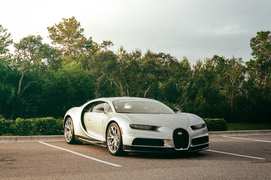
When one speaks of ultimate automotive performance, the name Bugatti inevitably surfaces. The Chiron Super Sport 300+ isn’t just a car; it’s a statement. It represents the culmination of decades of French engineering prowess and a relentless drive to shatter existing benchmarks. This hypercar etched its name in history by being the first production-spec vehicle to officially breach the 300 mph barrier, a feat that was once relegated to the realm of science fiction.
At the heart of this mechanical marvel lies Bugatti’s iconic 8.0-liter quad-turbocharged W16 engine. This engineering masterpiece is a symphony of power and precision, producing a staggering 1,600 horsepower and 1,600 Nm of torque. The ” +” in its name signifies the modifications made to the standard Chiron to achieve this extraordinary performance. The extended long-tail bodywork, a design element inspired by the legendary Bugatti Type 57 SC Atlantic, is not merely for aesthetic appeal. It plays a crucial role in managing airflow and ensuring stability at speeds that most vehicles can only dream of reaching.
The Chiron Super Sport 300+ boasts a top speed of 304.77 mph (490.48 km/h), a figure that sends shivers down the spine of any automotive enthusiast. However, achieving this required more than just raw power. Bugatti’s engineers meticulously optimized every aspect of the vehicle, from the aerodynamics to the transmission. The gearbox, a seven-speed dual-clutch unit, had to be recalibrated to handle the immense torque and the brutal acceleration. The suspension system was also revised to provide the necessary support and control at such velocities.
It’s important to note that the 304.77 mph run was conducted on Bugatti’s test track in Ehra-Lessien, a facility specifically designed for high-speed testing. The production version of the Chiron Super Sport 300+ is electronically limited to 273 mph (440 km/h) for safety reasons. Nevertheless, the fact that a road-legal car can achieve such speeds is a testament to Bugatti’s engineering genius.
While the Chiron Super Sport 300+ is a marvel of engineering, its exclusivity is equally noteworthy. Only 30 units were produced, each commanding a price tag well into the millions of dollars. This limited production run ensures its status as a collector’s item, a rolling piece of automotive history that will be revered for generations to come.
Hennessey Venom F5: The American Contender
When it comes to raw, unadulterated American muscle, Hennessey Performance Engineering stands tall. The Venom F5 is the brainchild of John Hennessey, a man who has dedicated his life to extracting every last ounce of performance from the automobile. The “F5” designation pays homage to the Fujita scale, which classifies tornadoes based on their wind speed. The F5 tornado is the most powerful category, with wind speeds exceeding 261 mph (420 km/h), a fitting tribute to the car’s intended capability.
The Venom F5 is a testament to American engineering innovation. While its predecessor, the Venom GT, was a formidable machine, the F5 was designed from the ground up to be a true hypercar, capable of competing with the best from Europe. At the heart of the Venom F5 lies a 6.6-liter twin-turbocharged V8 engine, affectionately nicknamed “Fury.” This powerplant produces a mind-boggling 1,817 horsepower and 1,616 Nm of torque, numbers that sound more like they belong in a Formula 1 car than a road-legal vehicle.
To handle this immense power, Hennessey’s team developed a custom carbon-fiber chassis that is both incredibly strong and remarkably lightweight. The car’s aerodynamics have been meticulously sculpted to optimize airflow and generate downforce, ensuring stability at high speeds. The design is aggressive, purposeful, and unmistakably American, with sharp lines and a low-slung profile that screams performance.
Hennessey’s ultimate goal for the Venom F5 is to surpass the 311 mph (500 km/h) mark, a feat that would make it the fastest production car in the world. The car has already demonstrated its capability by reaching speeds exceeding 270 mph in testing. The final high-speed runs are anticipated to take place on the Kennedy Space Center’s Shuttle Landing Facility in Florida, a fitting location for a car that aims to push the boundaries of human achievement.
Unlike some of its European counterparts that rely on hybrid technology, the Venom F5 remains a purebred internal combustion engine vehicle. This purist approach appeals to a specific breed of enthusiast who cherishes the visceral experience of a high-performance V8. The sound, the vibrations, the raw mechanical feedback – these are elements that cannot be replicated by electric powertrains, and Hennessey has doubled down on delivering this experience in its purest form.
SSC Tuatara: The Pursuit of Hyper-Speed
The story of the SSC Tuatara is one of ambition, perseverance, and the relentless pursuit of the ultimate speed record. Created by Shelby SuperCars North America (SSC), this hypercar represents the pinnacle of American supercar engineering. The name “Tuatara” is inspired by a reptile native to New Zealand, known for its ability to maintain its speed over long distances, a fitting metaphor for the car’s design philosophy.
At the heart of the Tuatara lies a 5.9-liter twin-turbocharged V8 engine, developed in collaboration with Nelson Racing Engines. This powerplant is capable of producing a breathtaking 1,750 horsepower when fueled with E85 ethanol, and 1,350 horsepower on premium gasoline. To handle this immense power, SSC engineers developed a carbon-fiber chassis that weighs just 1,247 kg (2,750 lbs), resulting in an astonishing power-to-weight ratio.
The Tuatara’s design is a masterclass in aerodynamics. The car’s body is a flowing sculpture of carbon fiber, with every curve and contour meticulously crafted to minimize drag and maximize downforce. The result is a drag coefficient of just 0.279, one of the lowest for any production car. This aerodynamic efficiency is crucial for achieving the car’s target top speed of over 310 mph (500 km/h).
The Tuatara’s journey to the record books has been anything but smooth. In 2020, the company attempted a two-way average speed run, aiming to set a new world record. However, the run was marred by controversy surrounding the data and video evidence. Despite the setback, SSC persevered, conducting further runs to validate their claims.
In January 2021, SSC achieved a one-way top speed of 331 mph (532.93 km/h) at the Johnny Bohmer Proving Grounds in Florida. While this was an incredible feat, it was not a two-way average, which is the recognized standard for world records. However, it demonstrated the Tuatara’s immense potential.
The Tuatara represents a significant achievement in the world of hypercars. It showcases what is possible when engineering expertise, innovative design, and a relentless drive for perfection converge. The car’s journey has been a compelling narrative of pushing the boundaries of automotive performance, and its legacy is firmly cemented in the annals of automotive history.
Koenigsegg Jesko Absolut: The King of Speed
From the frozen landscapes of Sweden emerges a challenger that aims to redefine the very notion of speed. Christian von Koenigsegg, the visionary founder of Koenigsegg Automotive, has long been synonymous with automotive innovation. His creations have consistently pushed the boundaries of what’s possible, and the Jesko Absolut is his magnum opus, a car designed with a singular purpose: to achieve the highest possible top speed.
The Jesko Absolut is the spiritual successor to the Agera RS, which previously held the title of the world’s fastest production car. However, the Absolut takes performance to an entirely new level.