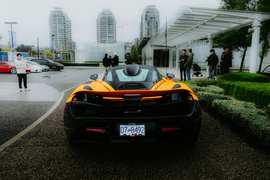
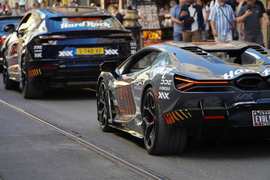
The Apex Predators: A Deep Dive into the World’s Most Powerful Cars of 2025
The automotive landscape of 2025 is a spectacle of engineering prowess, where the pursuit of ultimate performance has birthed machines that blur the lines between concept and reality. For the discerning enthusiast, the term “powerful car” transcends mere horsepower figures; it speaks to a symphony of aerodynamics, lightweight materials, and revolutionary drivetrains that collectively redefine the very essence of speed. This is a realm where innovation is the currency, and the benchmark for what’s possible is recalibrated with every new model that emerges from the hallowed halls of hypercar manufacturers.
In this comprehensive exploration, we will dissect the most formidable contenders in the global arena of high-performance automobiles. We will delve beyond the headline figures to examine the underlying technologies, the design philosophies, and the driving experiences that position these vehicles at the zenith of automotive achievement. This isn’t just a list; it’s a narrative of ambition, engineering excellence, and the relentless pursuit of the automotive sublime.
Understanding the Metric: Horsepower, Torque, and the 2025 Context
Before embarking on our journey through the rarefied air of the world’s most powerful cars, it is imperative to establish a clear understanding of the metrics that define their potency. Horsepower (hp), derived from James Watt’s steam engine calculations, is the rate at which work is performed. In the context of a vehicle, it dictates the maximum rate at which the engine can deliver power to the wheels, directly influencing top speed and acceleration potential.
However, in the hypercar echelon of 2025, horsepower alone tells only half the story. Torque, the rotational force generated by the engine, is equally critical. It is torque that provides the initial surge of acceleration, the gut-punch that pins occupants to their seats. In the era of electrification, the distinction between the two becomes even more nuanced, as electric motors deliver peak torque instantaneously, creating a driving dynamic vastly different from their internal combustion counterparts.
The 2025 landscape is further complicated by the proliferation of hybrid systems. These powertrains combine the visceral appeal of a combustion engine with the instant-on torque of electric motors, creating a synergy that often results in horsepower figures that eclipse traditional gasoline-only vehicles. This hybrid revolution is not merely a trend; it is a testament to the industry’s adaptation to environmental pressures and technological advancements, creating a new breed of hypercar that is both devastatingly fast and surprisingly efficient.
The Top Tier: A Definitive Ranking of the World’s Most Powerful Cars
To compile this definitive ranking, we have synthesized data from manufacturer specifications, independent testing results, and industry projections for 2025. The following vehicles represent the apex predators of the automotive world, each pushing the boundaries of performance in its unique way.
Devel Sixteen: The Hyper-Velocity Anomaly
Emerging from the creative crucible of SE Lamborghini and the engineering might of Manifattura Automobili Lamborghini (Italy), the Devel Sixteen remains the undisputed monarch of raw horsepower. With a theoretical output of 5,007 hp, this Italian hypercar is less a mode of transport and more a declaration of intent.
Engineered around a V16 engine, the Sixteen is a marvel of bespoke engineering. Its quad-turbo setup generates a level of power that renders traditional performance metrics almost irrelevant. The acceleration is not merely rapid; it is an event, a physical assault on the senses that few human beings are truly prepared for. The driving experience is characterized by an almost unsettling linearity, as the power delivery seems to expand infinitely with every incremental press of the accelerator.
While the Sixteen remains a homologation special, its very existence has reshaped the conversation around what is possible in automotive engineering. It serves as a benchmark, a yardstick against which all other hypercars are measured, and a potent reminder that the pursuit of ultimate speed knows no bounds.
Koenigsegg Gemera: The 2+2 Powerhouse
From the workshops of Christian von Koenigsegg in Ängelholm, Sweden, emerges a vehicle that challenges the very definition of a hypercar. The Gemera, meaning “to give more” in Swedish, is a grand touring concept that seamlessly integrates the practicality of a four-seater with the mind-bending performance of a top-tier hypercar.
The Gemera’s 2,300 hp is derived from a revolutionary hybrid powertrain that combines a 5.0-liter twin-turbocharged V8 with three electric motors. This configuration results in a staggering 2,750 Nm of torque, providing an elastic surge of acceleration that belies the car’s size. The transmission, a seven-speed Dual-Clutch (DCT) system, operates with a fluidity that is astonishing, allowing the car to transition between electric-only cruising and full hybrid assault with imperceptible grace.
Beyond the raw numbers, the Gemera represents a philosophical shift in hypercar design. It proves that extreme performance does not necessitate a spartan interior or a punishing ride. The cabin, appointed with premium materials and equipped with advanced infotainment systems, offers a sanctuary of luxury, making the Gemera a compelling proposition for the discerning collector who refuses to compromise on either comfort or velocity.
Rimac Nevera: The Electric Apex Predator
The neon-drenched streets of Zagreb, Croatia, have become the unlikely birthplace of a technological marvel that has redefined the electric hypercar segment. The Rimac Nevera, the brainchild of Mate Rimac, is a testament to the potential of electrification, boasting a quartet of electric motors that deliver a combined 1,914 hp.
What sets the Nevera apart is not merely its horsepower but its instantaneous torque delivery. With 2,360 Nm of torque available from a standstill, the Nevera catapults from 0 to 60 mph in a scarcely believable 1.81 seconds. This level of acceleration is a physical phenomenon, a force that challenges the very limits of human physiology.
The Nevera’s prowess extends beyond the drag strip. Its carbon fiber monocoque chassis, developed in-house, provides a rigidity that allows the car to handle with the precision of a scalpel. The torque vectoring system, which individually controls the power sent to each wheel, ensures that the car remains composed even under the most extreme cornering loads. In 2025, the Nevera stands as a beacon of electric performance, demonstrating that the future of the hypercar is not only sustainable but also breathtakingly fast.
Hennessey Venom F5: The Land Speed Record Contender
From the Lone Star State of Texas emerges a machine forged in the crucible of high-speed obsession. The Hennessey Venom F5, a creation of John Hennessey and his team of dedicated engineers, is a visceral ode to the pursuit of the land speed record. With a targeted output of 1,817 hp, the F5 is engineered with a singular focus: absolute velocity.
At the heart of the Venom F5 lies a 6.6-liter twin-turbocharged V8, a marvel of internal combustion engineering. This powerplant, affectionately known as “Fury,” is capable of revving to an ear-splitting 8,000 rpm, producing a sound that is both menacing and intoxicating. The power is channeled through a seven-speed automated manual transmission, which, while not as sophisticated as a dual-clutch system, provides a direct and unfiltered connection between the engine and the wheels.
The F5’s design is a masterclass in aerodynamic optimization. Its teardrop shape and active aero elements are meticulously sculpted to minimize drag, allowing the car to slice through the air with minimal resistance. This focus on efficiency is what enables the F5 to target speeds in excess of 300 mph, a realm previously reserved for specialized land speed record vehicles. In 2025, the Venom F5 represents the pinnacle of American hypercar engineering, a raw and untamed beast that challenges the very notion of automotive limits.
McLaren Speedtail: The Elegance of Speed
The spiritual successor to the legendary McLaren F1, the Speedtail is a testament to the enduring philosophy of its creator, Gordon Murray. This British hypercar combines the lightweight construction and driver-focused dynamics that are the hallmarks of the McLaren marque with a revolutionary hybrid powertrain that delivers a seamless and exhilarating driving experience.
With a combined output of 1,035 hp, the Speedtail’s hybrid system pairs a 4.0-liter twin-turbocharged V8 with a potent electric motor. The power is delivered through a seven-speed dual-clutch transmission, which orchestrates the transition between electric and gasoline power with imperceptible grace. The car’s unique three-seat configuration, with the driver positioned centrally, harks back to the F1, providing an unparalleled sense of connection between the driver and the machine.
What truly distinguishes the Speedtail, however, is its aerodynamic optimization. Its elongated, teardrop silhouette is a masterclass in fluid dynamics, resulting in a drag coefficient of just 0.278. This efficiency allows the Speedtail to achieve a top speed of 250 mph with a level of effortlessness that is truly remarkable. In 2025, the Speedtail remains a benchmark for hypercar design, proving that ultimate speed can coexist with elegance and refinement.
Porsche Taycan Turbo GT: The Electric Evolution
From the hallowed halls of Zuffenhausen, Germany, emerges a vehicle that represents the zenith of Porsche’s electric hypercar development. The Taycan Turbo GT, the most powerful production car ever to bear the Stuttgart crest, is a tour de force of electric engineering, boasting a staggering 1,034 hp.