Unleashing the Beasts: Why 2025 is the Definitive Golden Age of the 500-Horsepower Car
For the enthusiasts who lived through the muscle car wars of the 1960s, the phrase “Golden Age of Motoring” typically conjures images of roaring V8s, gleaming chrome, and the scent of high-octane fuel hanging heavy in the air. It was a time of raw, untamed power, where a 300-horsepower sedan felt like a nuclear weapon on four wheels. Yet, as we navigate the automotive landscape of 2025, it’s becoming increasingly clear that we are living through an era of horsepower abundance that makes the ’60s look quaint by comparison.
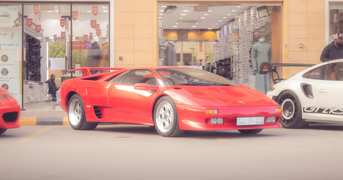
The benchmark of 500 horsepower was once the exclusive domain of exotic Italian supercars and specialized track machines. These were cars that demanded six-figure budgets, meticulous maintenance, and a driver willing to risk life and limb just to experience a taste of their ferocious capability. Today, that same performance threshold has been democratized to a degree that would have been unthinkable just a decade ago. We are witnessing a remarkable shift where the pursuit of sheer power is no longer the sole province of the mid-engined exotica. Instead, the quest for 500-plus horsepower has permeated nearly every corner of the market, transforming everything from family-friendly SUVs to luxury sedans into vehicles capable of rewriting the laws of physics.
This democratization of power is not just a statistical curiosity; it represents a fundamental redefinition of what is possible for the everyday consumer. Consider the baseline: a standard, mass-produced family car from 2025 can now out-accelerate the most iconic supercars of the 20th century. The velocity metrics that once belonged exclusively to the realm of automotive folklore are now readily available at your local dealership, often with a full suite of modern safety features and creature comforts.
This era of unprecedented accessibility raises a compelling question: are we truly living in the greatest period in automotive history? When you look at the sheer volume of vehicles available that can deliver spinal-compression acceleration, the argument becomes difficult to refute. The roads today are populated by machines that would have been dismissed as fantasy just a generation ago, each offering a visceral experience that pushes the boundaries of what we thought was achievable in a production vehicle.
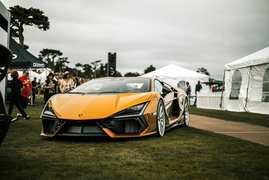
To celebrate this remarkable phenomenon, we’ve curated a list of the top 10 production cars currently on the market that boast 500 horsepower or more. These are the titans of the modern automotive landscape, vehicles that blend breathtaking performance with surprising levels of refinement and practicality. What’s more, our number one pick represents a triumph of accessible engineering, offering the highest horsepower figure on this list at a price point that defies conventional wisdom. Welcome to the new Golden Age of the 500-horsepower car.
#10. Mercedes-AMG E 63 S Sedan: The Apex of Autobahn Dominance
When it comes to the art of the high-performance executive sedan, Mercedes-AMG has long reigned supreme. The E 63 S is not merely a car; it is a statement of intent, a meticulously engineered machine that effortlessly blends the serene luxury of a Mercedes-Benz with the savage heart of a supercar. For the discerning driver who demands unwavering comfort on the daily commute yet craves the thrill of the open road, the E 63 S represents the pinnacle of compromise—or perhaps, the perfection of it.
At the heart of this automotive marvel lies AMG’s legendary 4.0-liter twin-turbocharged V8 engine. This powerplant is a masterclass in modern engineering, utilizing hot-V technology where the turbochargers are nestled within the cylinder banks. This innovative configuration allows for a more compact engine design and significantly reduces exhaust gas travel time, resulting in near-instantaneous throttle response. In the E 63 S Sedan, this V8 delivers a staggering 603 horsepower and 627 lb-ft of torque.
This colossal output is channeled through AMG’s advanced Performance 4MATIC+ all-wheel-drive system. Unlike traditional fixed-torque systems, the 4MATIC+ system is fully variable, capable of seamlessly distributing power between the front and rear axles as conditions demand. This intelligent torque vectoring ensures that whether you’re navigating a rain-slicked city street or carving through mountain passes, the E 63 S maintains an almost supernatural level of grip and stability.
The performance metrics themselves are nothing short of astonishing for a vehicle of this size and luxury. The E 63 S can catapult itself from a standstill to 60 mph in a blistering 3.2 seconds, a figure that would make many dedicated sports cars blush. The quarter-mile is dispatched in a shade over 11 seconds, and the car’s electronically limited top speed of 180 mph feels entirely conservative given the reserves of power still on tap.
What truly elevates the E 63 S beyond mere speed is its dual personality. Engage the Comfort driving mode, and the adaptive dampers relax, the exhaust note softens to a civilized purr, and the cabin transforms into a sanctuary of tranquility. The Nappa leather upholstery, the exquisite wood trim, and the advanced MBUX infotainment system create an atmosphere of pure luxury. Yet, with a simple press of the AMG button on the steering wheel, the character of the car transforms utterly. The suspension firms up, the exhaust opens its valves to unleash a symphony of guttural snarls and pops, and the throttle response becomes razor-sharp.
The interior is a testament to AMG’s dedication to driver engagement. The AMG Performance steering wheel, wrapped in Dinamica microfiber and carbon fiber, feels sublime in the hands, its integrated touch control buttons allowing for intuitive adjustment of drive modes and suspension settings. The digital cockpit is a masterpiece of clarity and customization, displaying critical performance data—such as G-forces, boost pressure, and lap times—without ever feeling overwhelming.
The E 63 S is more than just a fast car; it is a technological tour de force. Features like active lane-keeping assist, adaptive cruise control with stop-and-go functionality, and semi-autonomous driving modes make long-distance touring effortless. Yet, when the driver seeks a more visceral connection with the machine, the car responds with an immediacy and precision that belies its 4,500-pound curb weight.
While the E 63 S may not be the most affordable option on this list, its value proposition is undeniable. It successfully merges the capabilities of a luxury sedan, a high-performance GT car, and a track-capable machine into a single, cohesive package. It is a car that can ferry the family to school in comfort and style, then devour the Autobahn at triple-digit speeds with the same level of confidence and capability. In the realm of the 500-horsepower sedan, the Mercedes-AMG E 63 S remains the benchmark against which all others are measured.
#9. McLaren 750S: The Purest Form of British Track Performance
In the rarefied atmosphere of supercar manufacturing, McLaren occupies a unique space. Unlike many of its Italian contemporaries, which often prioritize dramatic styling and opulent interiors, McLaren’s philosophy is rooted in a singular, unwavering focus: track performance. The McLaren 750S, the successor to the beloved 720S, is the purest expression of this ethos yet. It is a car sculpted by aerodynamics, engineered for precision, and designed to deliver an unfiltered driving experience that borders on telepathic.
The 750S is built upon McLaren’s renowned Carbon Lightweight Architecture (MCLA), a monocoque chassis that is both astonishingly stiff and remarkably light. This foundational engineering choice is critical to the car’s exceptional agility. The MCLA ensures that the suspension works with absolute precision, allowing the car to react instantaneously to driver inputs without the torsional flex that plagues lesser vehicles.
Powering this carbon-fiber marvel is an evolution of McLaren’s acclaimed 4.0-liter twin-turbocharged V8. In the 750S, this engine has been significantly enhanced, with new pistons, a recalibrated ECU, and a more efficient fuel delivery system. The result is a scarcely believable 740 horsepower and 590 lb-ft of torque. This output is not simply large; it is perfectly proportioned to the car’s low mass, creating a power-to-weight ratio that borders on the extreme.
When the driver depresses the throttle, the response is immediate and violent. The V8 unleashes a banshee-like shriek as it spools up, pushing the driver deep into the Alcantara-trimmed sport seats. The acceleration is relentless, with the 750S reaching 60 mph in a neck-snapping 2.7 seconds. The quarter-mile is dispatched in a mere 10.3 seconds, and the car’s top speed of 206 mph feels almost irrelevant given the G-forces experienced during its initial acceleration.
The 750S’s transmission is a seven-speed SSG (Seamless Shift Gearbox), a dual-clutch unit that operates with blinding speed. Unlike some competitors that prioritize smooth, almost imperceptible shifts, McLaren’s SSG is designed to deliver a visceral, mechanical connection between driver and machine. Shifts are accompanied by a satisfying jolt and a dramatic blip of the throttle, providing auditory and tactile feedback that heightens the sense of occasion.
However, it is in the corners where the 750S truly reveals its genius. The car’s handling characteristics are nothing short of miraculous. The steering is light yet incredibly communicative, relaying every


 Unleashing the Beasts: Why 2025 is the Definitive Golden Age of the 500-Horsepower Car
For the enthusiasts who lived through the muscle car wars of the 1960s, the phrase “Golden Age of Motoring” typically conjures images of roaring V8s, gleaming chrome, and the scent of high-octane fuel hanging heavy in the air. It was a time of raw, untamed power, where a 300-horsepower sedan felt like a nuclear weapon on four wheels. Yet, as we navigate the automotive landscape of 2025, it’s becoming increasingly clear that we are living through an era of horsepower abundance that makes the ’60s look quaint by comparison.
The benchmark of 500 horsepower was once the exclusive domain of exotic Italian supercars and specialized track machines. These were cars that demanded six-figure budgets, meticulous maintenance, and a driver willing to risk life and limb just to experience a taste of their ferocious capability. Today, that same performance threshold has been democratized to a degree that would have been unthinkable just a decade ago. We are witnessing a remarkable shift where the pursuit of sheer power is no longer the sole province of the mid-engined exotica. Instead, the quest for 500-plus horsepower has permeated nearly every corner of the market, transforming everything from family-friendly SUVs to luxury sedans into vehicles capable of rewriting the laws of physics.
This democratization of power is not just a statistical curiosity; it represents a fundamental redefinition of what is possible for the everyday consumer. Consider the baseline: a standard, mass-produced family car from 2025 can now out-accelerate the most iconic supercars of the 20th century. The velocity metrics that once belonged exclusively to the realm of automotive folklore are now readily available at your local dealership, often with a full suite of modern safety features and creature comforts.
This era of unprecedented accessibility raises a compelling question: are we truly living in the greatest period in automotive history? When you look at the sheer volume of vehicles available that can deliver spinal-compression acceleration, the argument becomes difficult to refute. The roads today are populated by machines that would have been dismissed as fantasy just a generation ago, each offering a visceral experience that pushes the boundaries of what we thought was achievable in a production vehicle.
To celebrate this remarkable phenomenon, we’ve curated a list of the top 10 production cars currently on the market that boast 500 horsepower or more. These are the titans of the modern automotive landscape, vehicles that blend breathtaking performance with surprising levels of refinement and practicality. What’s more, our number one pick represents a triumph of accessible engineering, offering the highest horsepower figure on this list at a price point that defies conventional wisdom. Welcome to the new Golden Age of the 500-horsepower car.
#10. Mercedes-AMG E 63 S Sedan: The Apex of Autobahn Dominance